
Technology
10 Best Subscription Boxes for Kids (2026): STEM, Books, Clothes, Snacks, and More
By Marcus Chen
Advertisement · Why this ad?
Marcus manages the day-to-day editorial workflow across all brands, coordinating coverage assignments and ensuring editorial standards are met. He previously served as city editor at the Pioneer Press and holds a degree in Political Science from Carleton College.
More from Marcus →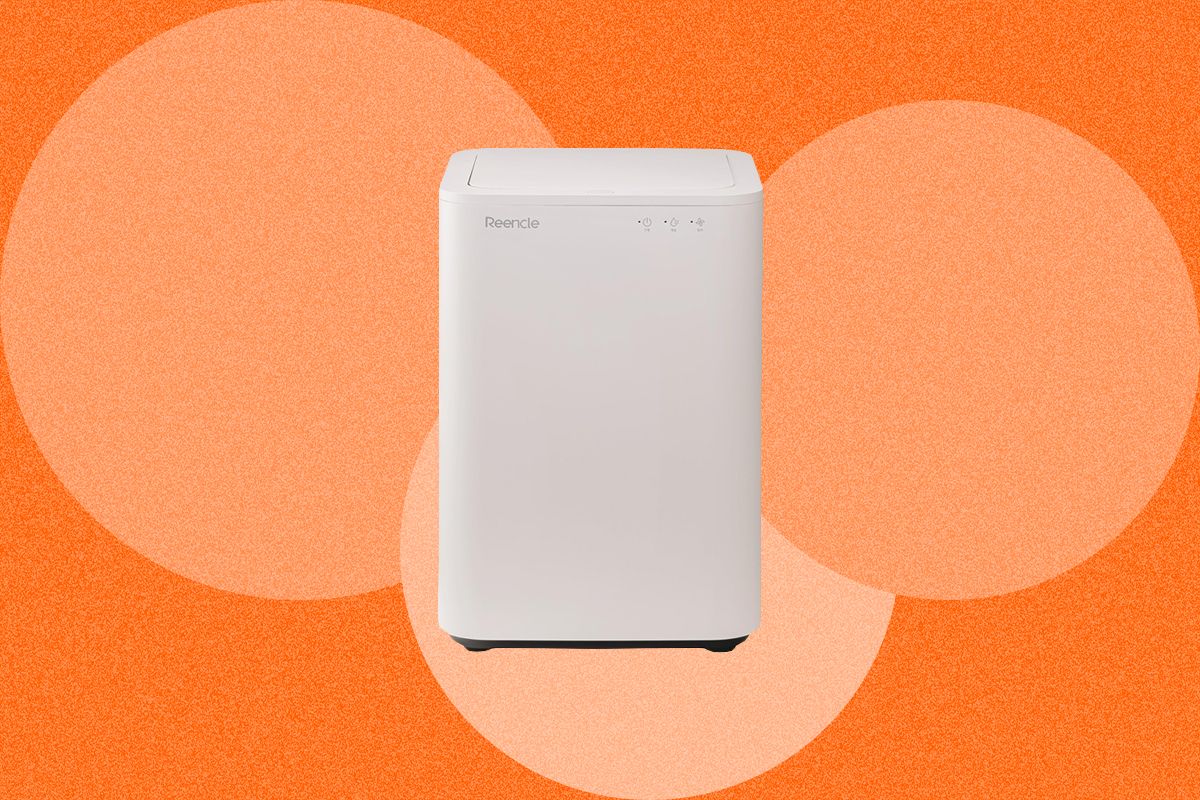
Save Story Save this story Save Story Save this story The countertop kitchen composter is a lovely thought. Instead of a smelly bucket of vegetable scraps and coffee grounds breeding fruit flies on your counter or attracting rats to your backyard, you could just put it all into a nifty electric gadget, and at some undetermined point in the future you'll have a bountiful supply of nutrient-rich compost to use in your garden. Unfortunately, none of the more popular electric kitchen composters do exactly this. Even though some of these devices are marketed as “composters” and have instruction booklets and apps detailing all the ways in which one can use compost, the vast majority of kitchen composters are just going to grind up and dry your food scraps. You will greatly reduce your food waste output, and it will no longer smell, but if you’re hoping to put eggshells and banana peels into a machine and magically scoop out the kind of compost you’d buy at the garden center, that’s just not going to happen. That said, you can mix small amounts of these grounds into potting soil in tiny ratios or use them as a feeder for a “real” compost pile. But again, most of these machines are meant for reducing the volume of household food waste. This is, itself, a legitimate goal, as cast-off food makes up 24 percent of municipal solid waste, resulting in the release of methane, a destructive greenhouse gas , as it breaks down in the landfill. Or maybe you'd just like your food grounds to be odor-free and shelf-stable before adding them to your green waste bin for municipal composting or your backyard compost. In any case, despite critics’ cries of greenwashing and corporate astroturfing , there is indeed value to these devices. They make people more aware of their food waste. They don't use a huge amount of power (around 1 kilowatt-hour was typical in my testing). And my top pick, the Reencle Prime (8/10, WIRED Recommends), even produces something close to compost. Also, be sure to check out our guides to the Best Indoor Gardening Systems and Best Smart Bird Feeders . Updated August 2026: I’ve added a section on the bokashi method, including testing notes on Bokashi Living’s signature bucket; more general buyer and user information; and a comparison table. Links and prices have also been updated. Table of Contents AccordionItemContainerButton LargeChevron Best Overall : Reencle Prime ($499) Best Grind-and-Dry Food Recycler : Lomi 3 ($649) Another Great Grind-and-Dry Food Recycler : FoodCycler Eco 3 ($400) A Decent Budget Option : Airthereal Revive R800 ($300) Largest Capacity : Mill Food Recycler ($999) The Analog OG : Bokashi Bin ($83) Other Kitchen Composters I Tried Compare Our Top 6 Kitchen Composters and Food Recyclers How I Tested Best Overall Photograph: Kat Merck Save to wishlist Save to wishlist Reencle Prime Electric Composter $499 $449 (10% off) Amazon (Prime) $549 $449 (18% off) Reencle (Prime) $649 Amazon (Gravity) $649 $549 (15% off) Reencle (Gravity) As I mentioned above, none of these machines makes truly ready-to-use, biologically stable, fully decomposed compost, but Reencle comes the closest to creating what you'd scoop out of a traditional compost bin or pile. Popular in South Korea years before it appeared in the US, the Reencle arrives with a starter bag of Reencle Compost Starter 1.0 (which you can purchase separately for $65 ) containing activated carbon, wood pellets, glucose, and a trio of patented thermophilic microbes ready to chow down. There's also a prefilled charcoal filter that slots into the back. Reencle Gravity (left) and Prime (right) Photograph: Kat Merck The Prime is too large for a kitchen counter, but it conveniently operates much like a heated trash can. The lid opens via a sensor at the bottom or a button on the control panel, and it goes into your organic matter. That's it. There are no cycles, tablets, or auxiliary buckets to worry about. Even the app is totally optional. Within hours to days, depending on the item, the scraps break down into a material resembling a cross between dirt and sawdust. The smell isn't always pleasant , but you can usually mitigate this with the control panel's Dry and Purify buttons or by adding what, in composting lexicon, is called “browns”—dry, carbon-rich materials, like bread or shredded paper. Reencle “pre-compost” Photograph: Kat Merck The Reencle also tends not to stink when you feed it its preferred diet of 1.5 pounds of scraps per day. Unlike other machines, it can also accept meat and dairy. For larger households, there's the Reencle Gravity ($649) , which is a couple of inches taller and can accept 3.3 pounds of waste a day. I also tested this and found it to be significantly quieter than the Prime—not that the Prime is noticeably loud, only about 30 decibels. The Gravity is nearly silent, which is a nice bonus. I did, however, find that over time, the Gravity contents went anaerobic (read: smelly) much faster than with the Prime. The increased volume seemed to retain more moisture. If you go with a Gravity, I recommend keeping plenty of browns (old bread, shredded paper) on hand to maintain microbial balance or adding in an additional few sessions of manual stirring per day with the included shovel. When the volume reaches the fill line on each model, it’s time to scoop out the grounds. At this point, you can mix the grounds with potting soil at a 1:4 ratio and leave it to cure for three weeks (I used a large tub in my garage). Afterward, you can use it for both outdoor and indoor plants. I’ve used the resultant mix to positive effect both indoors and outdoors. Eighteen-Month Update: For years, I’ve read about people experiencing the stainless steel stirring paddles breaking off in the Reencle Prime . And after a year and a half of using the device, the same fate has finally found me. I contacted Reencle to ask what customers should do in this situation. I learned that if the Reencle is within the warranty period (two years for units purchased on or after May 13, 2026; one year for units purchased previously), they can contact customer service to receive a paddle repair kit at no charge. If the unit is outside the warranty period, a kit runs $35. I don't love that this has happened, but Reencle's models are still the best of these devices, and I've found the company's customer service to be responsive and easy to work with, so it remains my top pick. Dimensions 12 x 13 x 18.4 inches Capacity: Minimum 1.5 pounds, maximum 2.2 pounds Can't process: Large bones or shells, fruit pits Cut food into small pieces before adding? Yes Fastest waste breakdown: 2 to 24 hours or longer, depending on the items How to use its output: Sift, mix 1:4 ratio with soil, cure for three weeks, and add to plants indoors or outdoors; add to compost pile Warranty: 2 years Best Grind-and-Dry Food Recycler Photograph: Kat Merck Photograph: Kat Merck Photograph: Kat Merck Video: Kat Merck Chevron Chevron Save to wishlist Save to wishlist Lomi 3 Countertop Food Recycler $649 $449 (31% off) Lomi Most kitchen “composters" simply grind and dry your food scraps, but the Lomi 3 countertop composter does the best job of this of the bunch. I'm always impressed when companies listen to feedback and adapt, and Lomi's new model solves a couple of the quirks found on the now-discontinued Lomi 2. Gone are the multiple modes, the annoying twist-off lid, and the need to put scraps right into the machine. Now there's a convenient 3-liter, 7.5-inch-tall countertop bucket, just like the FoodCycler below; an easy push-button lid; and Grow and Express modes. The Lomi 3 is also smaller and supposedly quieter than the Lomi 2, but my decibel meter found the difference to be negligible. One feature I did like on Lomi 2 that's missing from the 3, however, is Lomi mode, which could break down a list of appro
By Marcus Chen
By Marcus Chen

By Katherine Langford

By Marcus Chen